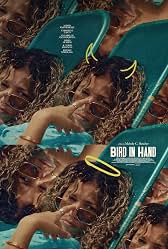

“Bird in Hand” (2025) is a confident, risk taking, first film from writer and director Melody C. Roscher. Roscher expands her short film, “White Wedding” (2021), to feature length without stretching it thin. After her live-in-partner Frank (John Reynolds) proposes, Bird Rowe (Alisha Wainwright) leaves Brooklyn and heads to Virginia to visit her mom, Carlotta or Carly Rose (Christine Lahti), stepdad, Dale (Jeffrey Nordling), and their cat, Toby, to plan the wedding, which is actually a cover story for her real agenda. What will make her happy? Spoiler alert: it is not what she thinks, but the good news is that thanks to the process of elimination, she begins to stop looking in the wrong places.
Roscher is brilliant. Every second of “Bird in Hand” gives one impression, but if you wait a little longer, more information is provided, and the whole situation flips thus proving that the initial assumption was all wrong yet somehow still offering a deeper truth. You will probably want to see it again immediately to appreciate this trick. A lot of filmmakers struggle to tell one story well, but Roscher tells one story with multiple layers, nuance and complexities. Most of the characters are unlikable, but the ensemble cast makes them visceral, distinct, three-dimensional people who feel familiar and are almost recognizable as if you know them. These are messy people in messed up situations, and Roscher’s ability to flip the script helps the viewer resist the impulse to judge. “Misty Green” (2026) may have bigger names and more resources, but if Roscher had the same advantages, this movie would get the attention that it deserves.
If you want proof that meritocracy does not exist, Wainwright is not a household name. She is a star and a brilliant actor. She glows and has that ephemeral quality that grabs and keeps the camera’s attention. There is not a moment in “Bird in Hand” where she does not have a bone deep embodiment of her character. A film is great when it shows in plain sight that someone is an alcoholic, but it is never mentioned in the dialogue. The focal points are her sadness, her compulsions and her efforts to externalize her issues. Yet once she takes refuge with the people that are supposed to be home, it makes sense that she acts out.
Cue Lahti, who usually plays salt of the earth characters. Thanks to Roscher, the dialogue perfectly conveys that Carlotta can barely tolerate her daughter’s presence without demanding that Birdy pay the tab with interest. Here is more context. There is a lot of discourse about biracial children and how their experiences are different depending on whether the mother resembles their child or not. Birdy is biracial and visibly Black, and Lahti is white. “Bird in Hand” plays with those assumptions, and what it is like to go home then not belong because everyone acts as if she should not be there. The ambiguity is whether Birdy is triggering some latent racism, these are ordinary mother-daughter issues, or if Carlotta is just an awful person like the stereotypes about Boomers who make their kids feel unwelcomed and unwanted.
It is essential not to take Nordling’s work for granted. He plays the easy-going guy who is a relative pleasure to be with who makes Carlotta tolerable but also enables her toxicity and follows her lead because she is his woman. He may think that she is wrong, and he may try to fix things, but he will always choose her. He is one of the better characters in “Bird in Hand.” He behaves more like Bird’s parent than Carlotta does, but Carlotta gets a glow up when more characters are introduced because she is comparatively more normal and less performative.
Their world gets fleshed out when Bird and Carlotta unenthusiastically plan the wedding, which means visiting plantations. If you are not Blake Lively and Ryan Reynolds, who since apologized, you should understand that getting married at a plantation is like getting married at a place where a war crime or human rights violations occurred. Mother and daughter are both committed to the bit of going through the motions of being together out of grim duty, not actual enjoyment. If the microaggressions were bad at home, they unnecessarily escalate elsewhere even while shopping. During a walk, one neighbor, Leigh (Annabelle Dexter-Jones), reacts understandably negatively to Carlotta but directs her threat and ire at Bird. Then Leigh pulls a reluctant 180 degrees after her husband, Dennis (James Le Gros), spots them, specifically Birdy, and insists that they accept his invitation to join them at their plantation. For those new to being cinephiles, Le Gros is the unofficial indie king and is generally a reliable indicator of quality. This section feels like a mild dose of satire, but it explodes to insane levels that are only predictable two seconds before everything goes bananas.
The question initially posed regarding to Bird’s relationship to Carlotta expands to include everyone else. There is a chicken and egg situation. Are people hostile to Bird because she is a compulsive liar and a screw up or because they are racist? It kind of does not matter, which means that “Bird in Hand” imagines a world that is as close to post-racial as it ever will be. It is Bird’s story, and her judgment is wretched, and she does not die. Bird is the closest that cinema gets to having a person of color who does horrible things, but they do not solely get attributed to race, and there is no judgment. She is her mother’s daughter, and her entitlement enables her to test people’s lies to themselves about their promises to her. One character correctly says, “We’re always telling a story whether we mean to or not…with our bodies.”
In Birdy’s dreams, she wears nightgowns and possesses an ease that she attempts to embody during her waking hours. The series of effective oneiric sequences are not always obviously dreams and are quite evocative. There is one towards the end when mother and daughter are walking. Please keep your eyes peeled in that scene and do not take for granted that you know what is going on because when the surprise comes, it is a blink and miss it scenario. It is incredibly powerful, makes sense in a dream logic way yet is elusive and a bit of a mystery.
If “Bird in Hand” sounds as serious as a heart attack, it is, but it is also hilarious because all these people reached expert levels of playing chicken with each other and eventually everyone must pay the piper. “Tiger Mom Academy” (2026) leaned too much into broad comedy to offset the more abusive and bleak aspects of the story whereas Roscher faces it head on without compromise and is the stronger for it. It becomes an epic comedy of errors with real world consequences.
“Bird in Hand” may only be available to the majority of people through streaming, but it is no television movie. Like life, it is not a tidy story that can be resolved over the course of a runtime or within the pages of a book. Roscher offers no easy answers but does offer her character a certain amount of peace and resolve to move forward. It is unfortunate that its theatrical run was limited to certain locations. Her camera work and movement reflects the characters’ relationship to each other, and the direction and actors’ choices signal the trajectory of their story arc, but it is harder to appreciate the understated notes on a small screen. Try anyway.