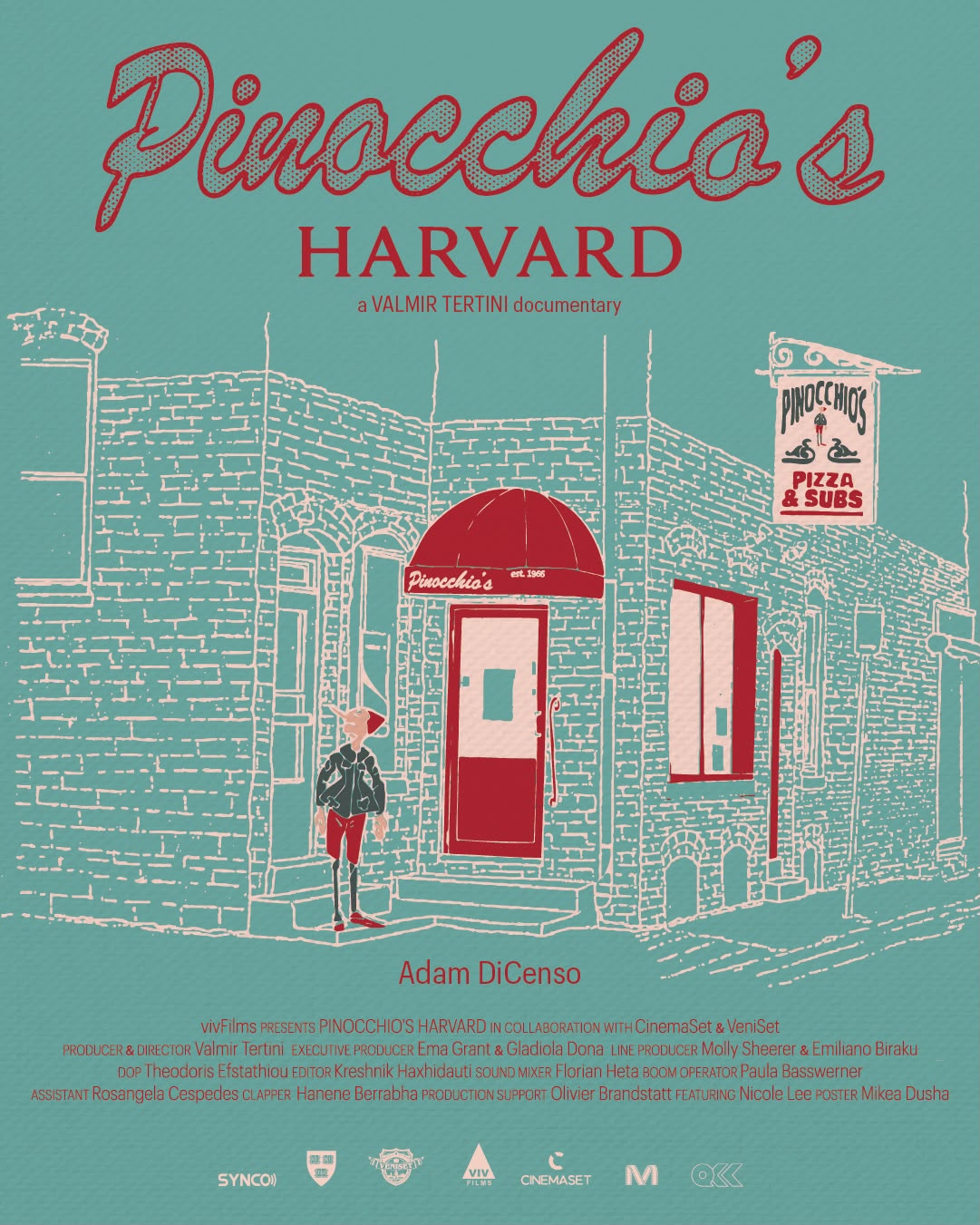

“Pinocchio’s Harvard” is a twenty-minute short documentary that offers a slice of Pinocchio’s Pizza and Subs owner Adam DiCenso’s life. In Harvard Square, DiCenso not only manages the kitchen and maintenance of the establishment for the locals and students, but maintains it as a must-see tourist destination for visitors interested in the most famous people who ate there. If you favor observational documentaries which follow a subject over a period without narration or talking heads offering more context, then director Valmir Tertini’s documentary will satisfy your appetite.
When watching “Pinocchio’s Harvard,” you must pick up the context clues. If you have never been to the restaurant, then you are unaware how challenging it likely was for Tertini to film in a tiny space without disrupting business. Tertini makes it seem bigger on screen than it is in person. A limited amount of time is devoted to the set up, but it is riveting to see DiCenso speak multiple languages with his employees. Most of the footage shows DiCenso offering a tour of his wall of fame to the people who visit the shop to get close to fame. There are also clips of the customers enjoying their repast.
Tertini also uses footage from The Phantom Gourmet, an archived local news segment and a clip from “Suits” to reflect how the establishment attracts attention from the mainstream media. It was a bit surreal for “Pinocchio’s Harvard” to chronicle Nicole Lee recording a segment for her video blog, “Food with Nicole.” The spiel about Mark Zuckerberg, Bill Gates, who makes a cameo, Matt Damon or Ben Affleck frequenting the establishment gets repetitive. Apparently, the average tourist is not as disenchanted with the tech bros as many and still consider them worthy because of their connection to Harvard’s legacy. This fascination is salient information for the viewer who may be surprised at who attracts the masses.
Tertini briefly captures DiCenso talking about the history of the business, and if the short becomes a feature, it would be an interesting idea to expand upon. Depending on the employees’ comfort with becoming a public figure like DiCenso, a feature could have mini portraits of the people who work there. “Tony” (2026) is charming because it also focuses on the ordinary (fictional) people as the protagonist on the eve of his fame. It would make the proceeding more staged instead of natural, but that ship has sailed. The short ends with DiCenso off the clock talking about the restaurant with a family member, maybe DiCenso’s daughter, in a car location nowhere near the restaurant. There is also a brief interview with Gates. Additional portraits of the people who make Pinocchio’s great would only make the documentary better even if the structure would alter the overall tone of the documentary.