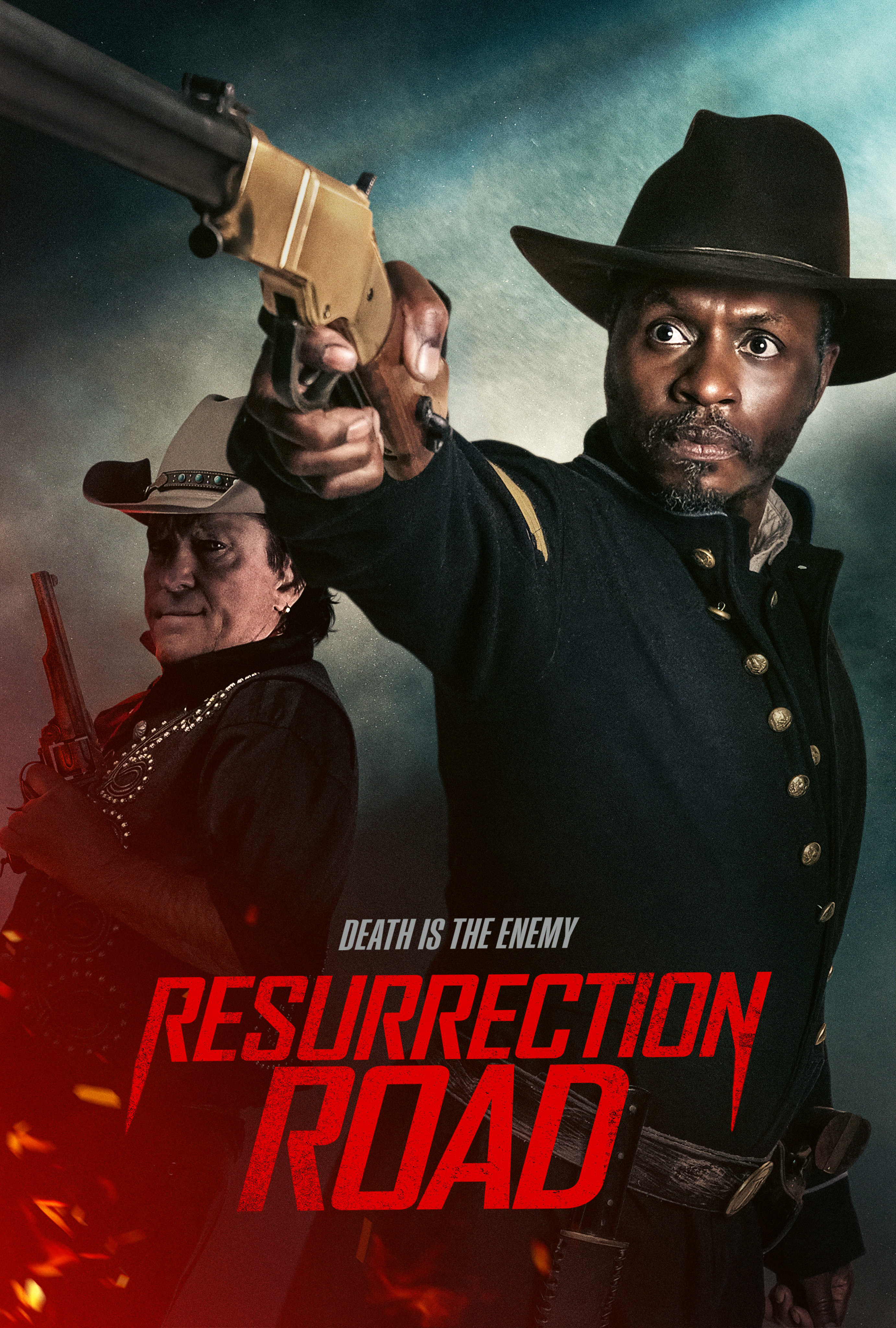

Set in the American Civil War in the nineteenth century, “Resurrection Road” (2025) is about six Black union soldiers tasked to seize the Confederate’s Fort Defiance in Arkansas bordering Native American territory and get more than they bargained for when it turns out that the legends of evil spirits are true. There are vampires in those woods and as their numbers dwindle, Tsula (Triana Browne), an indigenous woman volunteers to help by offering her expertise of navigating the land and knowledge of supernatural lore.
I went into “Resurrection Road” wanting to love it. The script writes itself: Black soldiers, especially formerly enslaved men, getting to demolish and enjoy killing Confederates because they are monsters! Yes, please. If there are vampires in a movie, I’m generally a happy camper so the quality must be exceptionally poor to not work for me. I also really love the idea of injecting the supernatural into well known conflicts like World War II with films like “Overlord” (2018) or “Abraham Lincoln: Vampire Hunter” (2012), which most people hated. It gives the filmmaker permission for the good guys to brutalize the bad guys because they are monsters, and it is actually a relief that monsters commit atrocities, not human beings, because then it seems rational. It does not help that “Sinners” (2025) was released before this movie because it shows how important it is to have the right people behind the camera writing stories within a specific historical context, especially when Black characters are involved. Basic media literacy demands that in films made in the twenty-first century, if Black people dominate the numbers in a horror movie cast and are supposed to be the heroes, then the Black characters should not be wearing red shirts and killed first.
Malcolm Goodwin stars as Barabbas, nicknamed Skip, the head of the First Kansas Colored Infantry Army of Frontiers. I’m a fan of Goodwin’s work, but it is unlikely that anyone could salvage this material. Barabbas is saddled with a trite storyline and as a leader, is more brutal to his men than the vampires. No details are offered regarding why he elects to use the death penalty on the men in his company who committed no act deserving of such a punishment. None of his men would follow him. It makes him a character that is impossible to get invested in since he poses as much of a threat to the Union soldiers as the general Confederate forces and vampires. His men do not know that they have a metaphorical gun to their head and have no choice but to fight or get executed for some ginned-up transgression, but it is unclear whether it is the reason for his severe reprisal, or if that battalion is even aware of the sword of Damocles hanging over their head. It is not the last time that writer and director Ashley Cahill randomly threw in a detail without a clue as to the weight of its importance in the story. It has the effect of feeling like a non sequitur. Barabbas was also annoying because his disbelief in the supernatural lasted longer than common sense should dictate.
It also does not help that there is infighting at the start of the assignment. For audiences to root for their success, there needs to be some sort of camaraderie between the men, which is absent in most of the story and the dialogue. The pacing is dreadful, and the body count mounts too quickly. The soldiers are barely individuated, so you must count on their physical appearance to distinguish them from each other. Abe Rossmore (Bryan Taronn Jones) appears to be the oldest one in the group. Stevens (Randall J. Bacon) wears glasses and is a Bible thumper. You do not need to know much about Blunt (Davonte Burse) because he will not be around for long. The dark-skinned Washington (Okea Eme-Akwari) was probably the most attractive one in the bunch. Cuffy (Furly Mac) felt more like a natural leader than Barabbas. Cuffy stood out with his different colored eyes, his gruff voice, and imposing demeanor. With all due respect to Goodwin, once Mac was cast, Cahill should have observed how commanding he was and turned Cuffy into an “Alien” Ripley twist protagonist, especially considering he was well-versed in superstition. Again, the actors are not the problem, but they were not given enough to do. In retrospect, they were really trying to imbue it with more substance than likely appeared on the page.
Tsula is one of the more interesting characters because she gets to prose dump vampire lore, and is actually competent in hunting, medicine and surviving. She calls the vampires Hooh-Strah-Dooh, which in the Wyandot people’s legend, is closer to possession lore than actual vampires, but the movie makes them more standard Bram Stoker stuff. According to the original legend, an evil spirit possesses a dead body. There was a clever new facet to the mythology regarding how to stop the vamp infection, which originates from the Wyandot’s accounts. One unexpected twist about vampire traits does not make sense in the overall context. It is downright contradictory and was poorly explained. When the vampires are finally identified and their backstories established, they make the vampires in “Abraham Lincoln: Vampire Hunter” seem like Einsteins. They are the most underwhelming on-screen vamps for the year. There was potential in the storyline that the Union knew that the Confederates were not human beings, but it gets wasted and ended up on the cutting room floor. The Big Bad, Quantrill (Michael Madsen), gets looped into that storyline in the least convincing way. Madsen is another personal fave, and I was psyched to see him, but the storyline is such crap. He is given nothing to work with other than looking as if he belongs in a Western, which is actually the opposite of his assignment considering his backstory.
Once night falls, and the team approaches the fort, Cahill’s limitations as a director overtake his weakness in storytelling. Some scenes looked like they were shot in the day, but through CGI, looked like night. Once inside the fort, the characters react to things that the viewers cannot see. The colors in the nighttime scenes feel artificial, which will take the audience out of the era-the overused purple from the MCU to connote Barabbas’ happier day flashbacks and sickly green for everything else. My rule for low budget movies is that if money would improve it, then it is a good movie. The denouement may have packed more punch with money, but the overall story is so weak that only spectacle could redeem it. There are tons of talk about watching out for the treetops, but it goes nowhere except for a CGI bat flying away. To be fair, Cahill’s daytime work was fine, but had bumps. For example, when the soldiers encounter civilians, including Tsula, Cahill makes some puzzling creative choices. He randomly zooms on a soldier instead of capturing Stevens proselytizing to Tsula. It is not the only time when he focuses on something or someone without a payoff, but it was the most glaring. Was there possibly a problem that could only be fixed in post-production with the actor doing a voiceover at a different time from the original shoot?
Maybe I went into “Resurrection Road” with higher expectations than I should have, but I was disappointed. Other than the scene where Barabbas, Tsula and Cuffy accept the supernatural and start info dumping and planning, the rest of the movie fell short either because of lack of character development, lack of funds or poor personal dynamic choices that do not hold up under scrutiny. The criminal error was not learning from an error made in “Twilight” franchise. No these vampires do not sparkle….