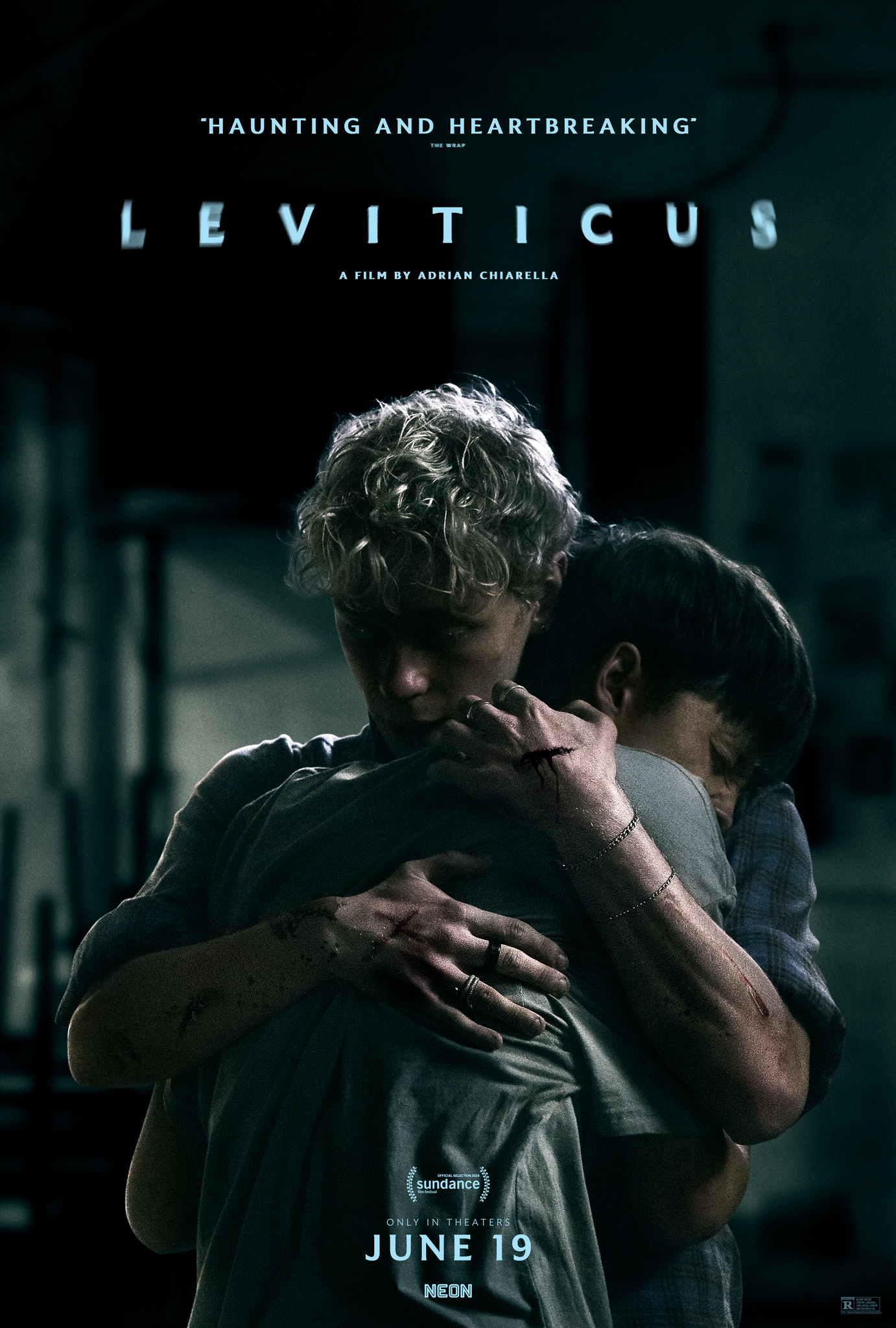

“Leviticus” (2026) makes the horror of gay conversion therapy literal and visceral. Naim (Joe Bird) recently moved to the neighborhood with his religious mom, Arlene (Mia Wasikowska, so good to see her again), and hates the area, but the only bonus is meeting Ryan (Stacy Clausen). Unfortunately, being a kid and gay comes with a death sentence when the parents give permission to a deliverance healer (Nicholas Hope) to pray the gay away, which results in a curse of an entity intervening in the gay teen’s life. The entity takes the form of the person that they are most attracted to, and if they go near that entity, it will kill them. So, either they can never be alone or must run in the opposite direction of anyone that they have a sexual attraction to. Who is the monster in this movie? It is not psychological horror if there is a real external threat that can hurt the characters. Writer and director Adrian Chiarella’s feature debut is perfect. No notes. I love everything about this film, soup to nuts.
When “Leviticus” opens, physically bullying, rough housing and making out verge on indistinguishable. Sex, le petite mort, letting go has always been dangerous, out of control, so adding actual danger is unforgivable. The body count may not be high in this movie, but it is still devastating. Naim holds back even when he does not have to. Bird has a heavy lift because his character is fully human and all the messiness that entails, which includes committing some unforgivable acts. Bird is an expert though. He was the little boy, Riley, in “Talk to Me” (2022). The movie is shown from Naim’s point of view, so the audience never sees through Ryan’s eyes, but Naim does sees the entity as Ryan, and there are no special effects, Clausen basically has his little slice of being James McAvoy-esque from “Split” (2016). Clausen does seem as if he is playing Ryan and a really convincing Ryan until the entity is close enough to destroy. Clausen looks more confident, desirable and magnetic as the entity. Let’s not take for granted how amazing their performances are.
The entity feels like a combination of the T-1000 with the vibes of the shapeshifter from “The Thing” (1982) and “It Follows” (2014). The most frightening aspect of this entity is its ability to mimic care, attraction and love then turn on a dime. Its considerable strength also distinguishes it from a regular human being. When it feels pain, which is a challenge to inflict, it screams like the pod people from “Invasion of the Body Snatchers” (1978). There is a dream sequence that made me briefly jump out of my skin. Now that’s a jump scare. When Naim is witnessing the entity attack others, the special effects are outstanding and is reminiscent of, well, “The Entity” (1982) except the single mom in the story is no victim.
Let’s add “Leviticus” to the growing number of movies that depict women and girls as three-dimensional human beings, i.e. capable of committing great evil while comfortably ensconced as victims in their storylines. There are a couple of examples in this story, but the biggest, non-spoiler villain is Naim’s mother. Naim is in a double bind. His mom wants him to make friends, but not like that. The parents curse their children, and though this film centers same sex relationships, it is easy to imagine parents doing the same thing to heterosexual teens.
When Naim begs his mother not to leave him alone, she gaslights him and acts like he is crazy while simultaneously believing in the supernatural based on her faith. This story shows how adults abuse the children in their lives then are annoyed when they create children who are unable to function and depend on them. Imagine consigning your child to a life without access to the most elemental human experiences, i.e. a life alone. The selfishness! Also even if there was no entity, the effect of the ceremony on the children should be sufficient for the adults to intervene considering such convulsions could be a sign of brain damage, but the lack of impulse to intervene, save their children from physical symptoms and call the Australian equivalent of 911 shows that these adults mirror the entity in the way that they intertwine love with destruction. Hate the sin, love the sinner?
If you are wondering if Chiarella intentionally referenced a book from the Old Testament, especially considering that it is not the only passage that is claimed to address same sex relationships in the Bible, he did, and the book of Leviticus has the most popular one. Leviticus 20:13 reads, “If a man practices homosexuality, having sex with another man as with a woman, both men have committed a detestable act. They must both be put to death, for they are guilty of a capital offense.” There is no explicit passage in the Bible that describes if or how they would be put to death, but in other passages unrelated to this text, people stoned heterosexual adulterers in Deuteronomy 22:22, which is why people assume that stoning would apply in this case as well. (Believe it or not, that was considered progressive compared to other cultures which would just prescribe stoning the woman). So, these adults are committing the same act in spirit, but they are not casting stones though the boys flirt with each other by throwing stones at each other. It is important to note that not all Biblical scholars interpret these passages in this way, but in the film’s context, this group would not be inclined to investigate alternate sources.
If you cannot take another film in which the gay characters face tragic, bleak ends and all the love interests die, “Leviticus” is not utterly bleak and has some great moments. There is a “good for her moment” when the tables turn swiftly on some bullies who had it coming. People foolishly conflate gay with defenseless. The movie strikes the balance between no easy answers but not completely without options, which makes it true to life. It is possible to move on, but the threat is always near. There are also genuine, tender loving moments along with heartbreak and cruelty. It puts the audience in the characters’ shoes: wanting them to be together but also being scared for them.
S
P
O
I
L
E
R
S
The other scene in “Leviticus” when a girl is shown as dangerous is the lynching scene, which felt so real. I kept calling that girl Carolyn Bryant Donham instead of Izzie (Davida McKenzie). The US struggles with depicting a female predator accurately without sexualizing and/or excusing her even though we have plenty of examples that fit neither bill. The first sign of danger is that she hangs out with homophobes, but lots of people disregard when someone hangs out with a hater. Don’t.
The scariest part of this story is that everyone understands what is happening to the boys, but center themselves in the narrative, not the actual targets thus leaving them mourning a person that they do not care for in life. That’s reminiscent to DARVO: Deny, Attack, and Reverse Victim and Offender. Lizzie blames the boys, not the adult men and women, which includes her parents, who decided to curse children.
A lot of people may want to excuse Lizzie as another victim, but she is a predator. She manipulates them, gets them to trust her, promises something beneficial but sets them up to be harmed. If she had tried to hurt them herself, that would be a crime of passion, but instead she potentially facilitated a murder. She wanted them to be outnumbered, overpowered, and for the perpetrators to possess blunt objects with zero repercussions for herself. She is even a predator of the bullies because she is ensuring that they will be effective whereas they may not have been able to truly hurt a victim before because of circumstances. The idea of a woman working up a group of men to attack is an ancient concept like the furies or hvöt.
My theory: during the first ceremony, Izzie is shown hanging out with Macca (Hyu Motoki) and arranged for him to start bullying Ryan before the entity killed her brother, Hunter (Jeremy Blewitt). Her father (Ewen Leslie) leaving was not the precipitating event.