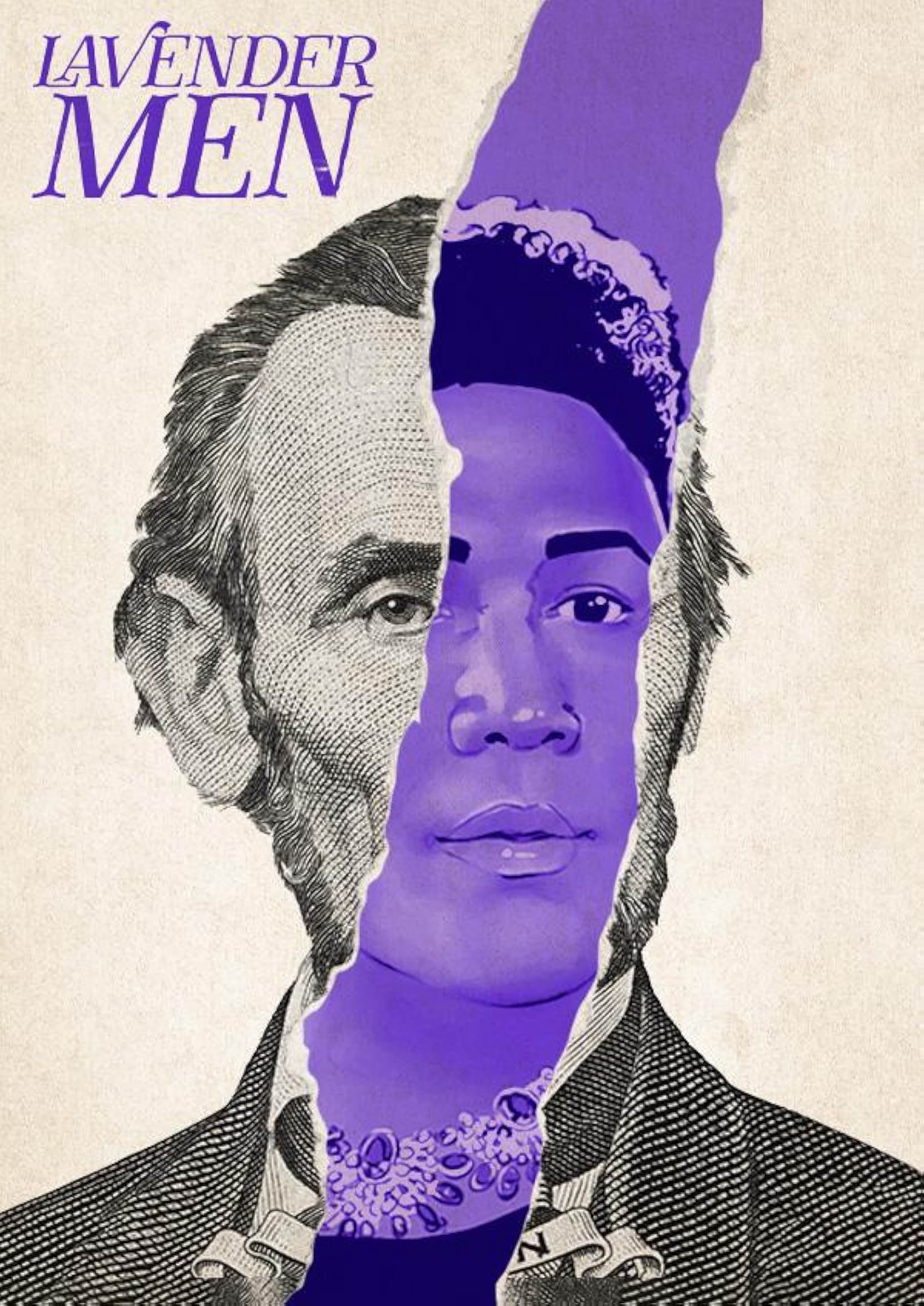

“Lavender Men” (2025) adapts playwright and star Roger Q. Mason’s 2019 play with the same title. Mason’s childhood friend, Lovell Holder, stays in the helm as director for the film. Black-Filipino, transgender and gender non-conforming (TGNC) Taffeta works as the stage manager and researcher on a humble play about Abraham Lincoln as a gay or bisexual man, but bears the brunt of indignities either receiving patronizing, brisk gratitude or abusive treatment. After hours, they decide to filter the play through their imagination, but even in their fantasies, Fantasia is a supporting character. Will Fantasia find a way to become the star of their play or remain in service to other people’s stories?
The narrative structure is layered and challenging. The bookends of “Lavender Men” are rooted in the real world. The beginning shows the end of the play until everyone leaves after the stage play is done, and the movie’s denouement occurs once Taffeta is ready to exit the theater. The middle occurs in Taffeta’s mind as they disassociate after an especially cruel encounter. They meet with the historical phantoms of Abraham Lincoln (Pete Ploszek) and Elmer E. Ellsworth (Alex Esola). In their mind, they recast Lincoln as their fleeting crush, Max, an audience member, who is dating Chris, the actor who also plays Elmer E. Ellsworth in the stage play. Lincoln and Ellsworth are desperate to relive their time together, but Lincoln is wary of Taffeta while Elmer embraces the opportunity without question and seems to accept Taffeta without suspicion.
Once the three agree on terms, Taffeta is free to conduct her fantasia version of the stage play. A fantasia is defined as a play in which the author’s fancy roves unrestricted. The fantasia has fifteen short acts with titles based on location, but the commencement and conclusion of each act is porous and punctuated with both players resuming their opening identities, nostalgically reflecting on their shared love story, and questioning Taffeta and their creative choices on how the play should unfold. Taffeta casts their self in different supporting roles within their fantasia version of the play and plays a cadet that Elmer trained, a ranking officer above Elmer, a town drunk, Mrs. Lincoln or Sadie, Lincoln’s Black freewoman servant who works at Lincoln’s law office, a tree, and a kerosene streetlamp. Usually, the wardrobe signals the character that Taffeta is playing, but there can be a shift when they return to being Taffeta. Occasionally Taffeta plays herself and breaks the fourth wall either to punctuate humor, act as director or express their pained feelings to the audience. Occasionally staged scenes will intercut with snippets showing Tafetta’s real life experiences. During the eleventh act, they comprehensively explain the backstory behind these glimpses of their past without interruption. The editing makes “Lavender Men” cinematic otherwise it could have stayed a play. They teeter between self-condemning disgust surrendering to majority culture’s judgment to consummate confidence, joy in unfettered self-expression and dignity. They also imagines the historical pair in the real world.
“Lavender Men” will require all your attention and abandon your cynicism at the door. It requires that you watch it with your heart, but your mind must follow close behind. No escapism in this fantasia. To get in the right frame of mind, it would be perfect to watch after “Sally” (2025), a documentary about how Sally Ride remained closeted, which pained her same sex partner. The pain of hiding love suffuses into the pain of being unwanted in a world that technically no longer requires hiding. Mason has created an ever-shifting masterpiece, but their mind may be too high above mere mortals to truly appreciate this work. Repeat viewings will help because then it will be more obvious. While Taffeta is the star, there is room for Abe and Elmer’s individual and collective pain, dreams and desires, to be expressed.
Ploszek has the hardest acting job because he must play so many roles. As Max, he is a stranger in the early stages of romance and polite interactions with everyone else because he only has eyes for Chris and wants to resume devoting his complete attention to him. As Lincoln in relation to Taffeta, all his prejudices lash out, especially the threat that Taffeta poses to his legacy and the compromises that he is willing to make to engage in forward progress and satiate his ambition and goals. As Lincoln in the play, he has multiple roles: the husband expressing affection and tolerance while stifling visceral disgust, trying to subtly court Elmer while maintaining professionalism in case his interest is not reciprocated and as the lawyer reveling in the opportunity of human chaotic emotion. He also beseeches that Taffeta protect Elmer, who will die if he goes to DC. Lincoln resents needing help whether it is from his wife or Taffeta.
Esola has a harder role than it appears at first glance. As Elmer and Chris, he is one of the kinder people to Taffeta and shows gratitude, but also, they are appreciated more for what they do, not who they are, and saying no results in an eruption that reveals the difference between usefulness and innate value without decreasing sympathy towards the character. As Elmer, he treats Taffeta as a person and appears more comfortable with his own identity while expressing insecurity over his own appearance, which underscores Taffeta’s self-loathing over their size. Elmer is the Marilyn Munster of the group, aggressively normal and just as down as the more overt outliers in the group. Esola’s little chair dance in “Chandelier” is terrific. He is also the only character besides Taffeta to insert himself in a fantasy real-world sequence of what could have been if history did not happen, which echoes Spike Lee’s best movie, “25th Hour” (2002).
“Lavender Men” fails to tackle one important question. There is nothing wrong with Taffeta setting their sights for conventionally attractive men, but when is Taffeta going to be attracted to someone like them. The politics of desire are underexplored. It is interesting that the bookends of the film consistently feature Black women as the only supportive and encouraging figures in Taffeta’s life who encourage them to take care of their self: the woman who plays Sadie in the stage play (Mia Ellis), and Sharon (Cherie Corinne Rice), the ride share driver, who ushers them into the real story. It is a male centered story because that is who they desire, which also stands in the way of self-love. It also gets messy because they are all coworkers, so it dances on the edge of sexual harassment and reciprocated love.
If “Lavender Men” will lose people, it will be because they are not completely into the love story between Lincoln and Elmer, which does not feel visceral until the tenth act. One purpose of the fantasia and the play within the movie is to rehabilitate history and stop hiding LGBTQ relationships. It is not the actors’ fault, but the dialogue is dry and could easily be between two platonic colleagues. It could be the point because in the eleventh act, Taffeta insists on staying to bear witness to the real physical attraction. Also, the cell phone scenes needed better screencasting because even though the chats are presented on a fictional app called Backdoor, they are pivotal, but inscritable and unreadable.
“Lavender Men” will be especially poignant for those who have loved and lost or still bear the scars of unrequited love. If you are familiar with black box theater, you will have the advantage over less theatrically inclined viewers. You will have to rise to its level because it will never make itself more approachable for you. If you can engage with the work, it is achingly moving and memorable. Give them your coins! (Were those pennies, which are coincidentally no longer being created?)