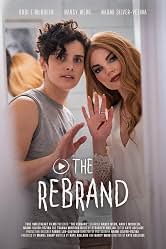

“The Rebrand” (2025) is a hilarious found footage, fake documentary film with horror elements, but the only monster is monetizing culture and toxicity. Thistle (Nancy Webb, who also cowrites) and Blair (Andy E. McQueen) hire pregnant videographer Nicole (Naomi Silver-Vézina, who is also the cinematographer) to make a documentary in the hope of staging a comeback after they get cancelled, but the longer that Nicole stays with them, the weirder things get. Will Nicole be able to get out, and will Blair wake up? Cowriter and director Kaye Adelaide’s feature debut is delicious, fun and fabulous with only minor dangling threads. It is a terrific film and more so considering it is only Adelaide’s first film. Let’s hope that she keeps making films, and she gets even better with experience.
Nicole is a bit underwritten but is a normal woman who is working and needs money to secure a good life for her and her baby. Silver-Vézina is classically gorgeous and could be called a post-modern Snow White with her porcelain skin and ebony black hair plus her elemental wardrobe highlights her beauty: all black clothes with a bright red coat. In one scene, she is sitting on a bright green lawn chair. “The Rebrand” does not explain why she needs to move, but she does and needs the money. She sees the red flags, but like the titular characters in “The Fearless Vampire Killers” (1967), Nicole is more committed to permitting incursions on her physical body and maintaining a veneer of normality as part of a job, which makes the moments when she breaks character better, especially when she runs with the camera to stick to her own agenda, survival/escape. Silver-Vézina manages to keep the audience rooting for her, and is not annoying and wearing a red shirt.
As a unit, Thistle and Blair initially seem to be empty vessels who only exist for the camera but are a fun couple. Individually, they create different impressions. Thistle is always on and controlling while Blair is not the brightest bulb and despite seeming butch and more physically present, Thistle is more domineering. Webb is so good, and McQueen manages to maintain their character’s innocence and stupidity without being frustrating. When Blair exhibits flashes of insight, it is genuinely surprising. To be clear, enablers can be villains and have the potential to be just as dangerous as the most visibly explosive partner, but McQueen makes it feel alright to veer from reality.
There is a running joke that Blair does not understand how pregnancy works at all so when Nicole has a labor scare, Thistle claims that Blair is a doula. You kind of have to be there, but every scene in “The Rebrand” is hilarious. The comedy relies on how chronically online culture affects three people and expands a toxic relationship into a nonconsensual threesome predicated on image, not forming authentic connection based on reciprocal respect for the others. Blair and Nicole end up walking on eggshells around Thistle, who becomes increasingly unhinged in the way that she operates to try and get what she wants. The real PSA is just because you are not visiting men does not mean that you are safe and stop letting the craziest person in the room set the temperature. Yet in the real world and on screen, people keep ignoring this lesson. Real misogyny is denying that women are human beings thus capable of engaging in harmful acts and not all sugar and spice and everything nice. When Thistle pops out and drapes herself over Nicole’s windshield, she taps on it just like influencers do with products. It is characteristic of the nice little details that elevate otherwise cheap but effective jump scares.
For a movie with limited locations and a cast that you barely need two hands to count the number of actors, Adelaide and Silver-Vézina keep everything popping and crisp. “The Rebrand” looks phenomenal, better than a lot of movies with bigger budgets and with a more experienced crew. The location is almost its own character: an autumnal, isolated, warm area with a bright interior. The basement is cramped with objects, including the boiler, but Blair’s main space to freely express themselves. Thistle occupies every other space even if she is not in the room. Nicole’s guest bedroom has plastic sheets instead of doors or walls with the explanation that it is under construction, but it also reflects the kind of relationship that Thistle wants to have with her: constant access and permeable barriers. It is terrific filmmaking to have a space that parallels the character and their relationship dynamics. One silent car ride is the height of awkwardness and feels like a reference to “The Wizard of Oz” (1939).
How is the horror? You may not be scared while watching “The Rebrand,” and the scariest part is how many interactions could happen in real life before Thistle gets violent. The biggest twist is whether Blair, who is the nicer half, will continue to cosign their partner’s actions or if they will let decency give them a backbone. The next big shock is that some of Thistle’s paranoia is validated in the end. It is the old crazy girlfriend trope mixed with the innate strange behavior of social influencer.s There are a lot of candid shots that make it seem as if Nicole is uncovering the shadiness for herself, and it is foreboding. The found footage elements are seamless. When Thistle’s voice becomes demonic without explanation, you will be ready to sign a waiver and need no explanation. It works. There are so many movies about Satanic cults targeting a pregnant woman that it is actually refreshing that there is no anti-Christ, just regular degular people acting gonzo.
At the eleventh hour, “The Rebrand” decides to show how Thistle influenced Nicole, which could have been a thread that started earlier, but does pay off well during the second half of the mockumentary, which appears as bookends to the story and is not promoted in the trailer. The mockumentary series is delightful, and Tranna Wintour is the host. If you are unfamiliar with Wintour, not to be confused with Anna and presumably no relationship, think Fred Armisen deadpan except consistently funny and au courant (we see you, bilingual queen). Honestly her performance is so satisfying that the movie will leave viewers wanting more.
“The Rebrand” never shows what Thistle and Blair did to get cancelled though it is alluded to. It has something to do with remarks about transpeople, but those remarks are not shown on screen. Unfortunately, in this climate, that would make them more money. In a vacuum, this omission feels coy, but in the context of this era, it is frustrating but better not to help people be mean to the filmmaker and some of the actors who are trans. It was intended as a reference to how cis people in the LGBTQ+ community fail members, but it does not really land as a result though it is intended. It was rich that whenever the couple engages in shady behavior, they blame the homophobic neighbors, who never appear onscreen.
“The Rebrand” is a must-see film unless you too are a homophobe. Even if you are, the narcissistic like behavior may be what sucks you in, and if you spend any time online, this movie will be the funniest movie of the year. Adelaide and everyone involved will hopefully be able to quit their day jobs and keep making films.