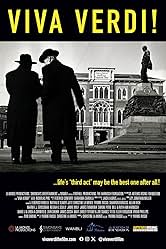

“Viva Verdi” (2024) is a documentary set at the Casi Di Riposi per Musicisti Fodazione Verdi, also known as Casa Verdi, a home for retired opera singers and musicians that Italian composer Giuseppe Verdi built in Milan. Cowriter and director Yvonne Russo’s and cowriter Christine La Monte’s feature debut depicts the delightful, quotidian routine at the museum house. Thanks to the 98th Academy Awards nominating “Sweet Dreams of Joy,” which Nicholas Pike wrote and Ana Maria Martinez sang, for “Best Original Song,” the documentary has gotten more, well-deserved attention.
“Viva Verdi” primarily consists of interviews with the residents of Casi Verdi and features their name, their music experience and age. Russo keeps the interview dynamic with montages of color and black and white photographs, album covers, archival footage of performances to depict the biography that the interviewee is telling inside their apartment or common space depending on their preference. Russo also shows a day in the life of many of the residents, which includes their morning routine, getting dolled up, heading to the eating area, then spending time tutoring some of the sixteen resident international students or participating in a musical activity of their choice. In the US, to get these kinds of accommodations, it would cost a pretty penny, and it still would not be as stimulating and transcendent as the experience shown because of the quality of the residents, activities and facilities. There is even remarkable archival footage of Verdi’s funeral procession in 1901 and the first residents in 1902.
Interviewees include Claudio Giombi, a baritone and music teacher, who discusses his life story and recounts the history of Casa Verdi. He is probably the most active person there with the longest, most storied career, which includes singing at the Metropolitan Opera with Pavarotti in “La Boheme.” Giombi gets the most screentime while others are just shown briefly such as Glauco Rosignoli, an eighty-five-year-old pianist, Emma Giaccone, who is one hundred four years old, ninety-six-year-old tenor Angelo Lo Forese, or glorious singing showoff eighty-seven-year-old Luciana Fava. Only one couple, the Catanas, is named and interviewed though not individuated except for when the husband sings in front of one of his recorded performances that is playing on the flat screen television behind him. Anthony Kaplen, a tenor, hails from South Africa, and Chitose Matsumoto, a soprano and pianist, was born in Sag-shi, Japan. Tina Aliprandim is captured still playing the violin at ninety-one years old. Lina Vasta, a soprano and vocal coach, prefers her life at Casa Verdi compared to before. Unlike Giombi, many of the residents had to stop their career short because of lack of opportunities, racism or xenophobia, gendered issues or lack of money despite early success or obvious talent. Living at Casa Verdi gave them the eleventh-hour opportunity to devote themselves to music again.
Most of the students are shown performing and are not identified except for Marco Kim, who plays the violin, and tenor Massimiliano D’Antonio, who says some essential points. Intergenerational interaction is not only essential to keep the residents busy and active, but their gifts cannot be passed down in a book. Some knowledge must be experienced and cannot be replicated in another medium. For music to remain alive, it is essential to not only nurture young talent but care for older talent instead of just treating older people as a burden or an expense. They are a precious, priceless fount of knowledge that even “Viva Verdi” cannot fully convey. The entire atmosphere and care given reflects the appreciation for the residents regardless of their fame or finances.
Russo does not restrict “Viva Verdi” to the house. The rhythm of the film is to start with exterior, still shots of the ornate treasures inside before showing people using the space. There is also animation of Verdi inside the Giuseppe Verdi Opera House in Busseto, Italy before she shows the original location live during a field trip to Piacenza and to see a performance of “I Masnadieri” at the Regio Opera House in Parma, Italy. The field trip would not be complete without a trip to an unnamed restaurant in the area. The only administrator shown onscreen interacting with the residents and giving interviews is Ferdinando Dani, Director of Activities. A hairdresser, a barber and kitchen staff appear briefly but remain unnamed.
The only family member shown visiting is Marco Rossni, Tina Aliprandim’s son in a home video and at a birthday celebration in Casa Verde with Giovanna Nocetti, an Italian singer, providing the entertainment. “Viva Verdi” is an ode to life where death is referenced but not shown. People receiving medical treatment stay offscreen, and though residents mention the loss of fellow residents who are friends, if there is a convalescence area, it remains invisible. They are immortalized in photographs or the wistfulness of the outside view of bustling nightlife in Milan. At the end of the social day, one resident said that the saddest part is returning to a lonely apartment, and Russo reflects it in a shot of the darkened, empty walkways, which is reminiscent of sneaking into a museum after hours. It is the one way that a viewer can tell that an American made the documentary because death is exiled from the screen, or perhaps it was a condition of access. Instead, the closing credits depicts the afterlife as a golden field of sunflowers at sunset. It could be out of respect or lack of permission, but in the US, it is unusual to see images of ordinary death because of aging. Death only gets shown if it is dramatic or historic otherwise it is sanitized and hidden. Demystifying age and focusing on older people was countercultural enough for us.
“Viva Verdi” is also easier to focus on because these are exceptional, merit based older people in a beautiful location. They are still contributing to society and lively because of their gifts. Leonello Bionda, a seventy-seven-year-old drummer, is pictured using a desktop computer to prepare the Voce di Casa Verdi, The Voice of Casa Verdi, a newspaper issued every three months that chronicles the goings-on at the home. Russo animates the pages of the publication. It feels as if there are only two ways of imagining older people, in crisis or at their best.
If you love opera or Italy, “Viva Verdi” is a must see. If you hate subtitles, consider yourself warned because only a little English is spoken, and you will need to read while watching a movie. If you are an American, it may fill you with rage at how older people are treated here more like zombies than people and given very little quality even when spending huge quantities of money. It raises the question of do people only deserve to be treated like human beings because of an accident of birth, the value of their net worth or talent. On the other hand, please do not create a home just for lawyers. We go to court until we drop.