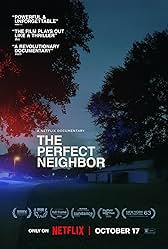

If a documentary fulfills the filmmaker’s goals, it is a success. Director Geeta Gandbhir’s “The Perfect Neighbor” (2025) was made to ensure that the person who murdered her best friend’s sister-in-law, Ajike Owens, would pay for her crimes and debunk any possibility of using Florida’s “Stand Your Ground” as a defense. Another metric is if it resonates with audiences and is receiving accolades. The 98th Academy Awards nominated it for “Best Documentary.” On November 9, 2025, I was present at the Critics’ Choice Documentary Awards when it won five out of six categories and had the honor of meeting the people behind the film. As a movie critic, I choose to watch a movie if I’m going to talk about it otherwise, I will abstain from commenting on it, and I was not going to watch it. In the interest of full disclosure, my thumb is on the scale for this film because without a personal interaction with the people behind the film, I would never watch it. I did not want to watch it for the same reason that it was made. I do not need to see to believe.
“The Perfect Neighbor” mostly consists of police bodycam footage. It begins after the murder on June 2, 2023 before rewinding to February 25, 2022 then showing everything in chronological order. While many people appear onscreen, there are only three real characters: Susan Louise Lorincz, her neighbors and the Marion County Sheriff’s Office. Owens does not even play a prominent role in the footage, but she is one of the first adults who appear. She is only a fraction of a tight knit community of mostly parents and children, and the neighborhood agrees on one thing: Susan is the problem. After the murder, the neighborhood’s reaction turns to outrage and heartbreak. Would your neighbor express such distress if someone killed you? When one of Owens’ sons runs to a neighbor for help, and they do, it is retroactively obvious that their unity was not a show put on for outsiders. Even if they were all in cahoots with each other and decided to be mean to the new lady, there are two moments when Lorincz proves to be an unreliable neighbor: when she destroys someone’s private property elsewhere and how she reacts whenever the cops stop humoring her.
While “The Perfect Neighbor” is not a movie intended to depict both sides, one thing that both sides could agree on: law enforcement was ineffective. On one hand, they do not automatically believe Lorincz and end up making nice with the neighbors. One cop is in the binary. Why are the two options loud kids playing or kids committing crimes? That sentiment seems to underlie everything they think about the situation. On the other hand, the cops seem to have a lax definition of enforcement. After Lorincz commits property damage, they kind of just chat. Cops are supposed to protect private property more than human life. After the murder, they are concerned for Lorincz’s safety. Earlier there are reports of Lorincz waving her gun at kids. Florida was not an open carry state at that time. This information is presented and given the same weight as any other scenes though editor Virdiana Lieberman obviously does make it digestible, so we are not just drinking from a hose.
“The Perfect Neighbor” is an observational documentary that gives its audience firsthand access to local events, but can a bodycam be authentic? If audiences respond to it, it is because we are groomed to enjoy this format because of reality TV series like “Cops” and found footage horror except that is exactly why I could not enjoy this documentary. One problem with making a context free documentary is assuming that an audience will pick up on important moments and knowing that they are not getting the whole picture. Found footage films give the illusion of a complete experience, usually of the person at the center of the storm, but Ajike is not that person, and she is the only person that I care about in this story along with the rest of her family. To be fair, the film’s point is not to center the victim or individuate the neighbors, but to say, “See, this lady who claims to be scared is actually terrorizing a neighborhood. Recognize her true face so you don’t become complicit now or in the future.” If you do not need to be told that, then this movie is not for you.
“The Perfect Neighbor” puts the viewer in the cops’ shoes so like found footage, people at home can pat themselves on the back and believe that they would do a better job if put in the same situation. It is a fantasy that law enforcement in the right hands would stop Lorincz. It is amazing to have access to every moment after something happened, but listening to a cacophony of voices talk about what happened without having names to associate with faces makes it challenging to have something more to hang on to besides frustration, especially because it begins with the end thus making the conclusion seem obvious with every moment. By the time that law enforcement intervention is necessary, it is too late.
“The Perfect Neighbor” waits until the end to pull back and focus on community reaction, law enforcement and judicial action. I was left wanting to know more. For instance, Lorincz says that she is a doctor (she is not) among many other things. It is not a true crime documentary, but if Lorincz is going to be in front of the screen and coddled for most of the film, she needs to be challenged and eviscerated elsewhere. That sentencing is not enough. She looks better after being incarcerated. The filmmakers are better people than me. In the real world, extrajudicial executions occur when people commit no crimes, but law enforcement gently coaxes Lorincz out of an interrogation room. I need a dossier of how much she lied about herself and a blow by blow of everything. Debunk her words.
No, instead I’m left with Owen’s kids’ wails. Why do I need to drink children’s tears to believe that Lorincz is wrong? Without “The Perfect Neighbor,” there is no punishment. Ugh. The US has plunged into a dystopian affair if families need a movie to get justice. I regret that I watched this film because I do not need it. I’m the choir. It is not for me, and I’m not one of those people who refuses to watch any film that features Black pain. Why is this different? Because it is real, and it embeds a bad libertarian lesson: the system does not work, and this story shows the system at its best.