
Maybrook, McCaren County, Pennsylvania is the site of the disappearance of seventeen children who ran from their homes one Wednesday night at 2:17 am and never returned. After a month with no leads, the town tries to return to business as usual, but the ripple effect of the tragedy is not over. Who knows what happened? “Weapons” (2025) is my “Longlegs” (2024). Writer and director Zach Cregger is at the top of his game with an almost perfect movie that may remind you of Stephen King’s good old days.
“Weapons” tells the story from the following characters’ point of view: Justine Gandy (Julia Garner), Archer Graff (Josh Brolin), Paul Morgan (Alden Ehrenreich), James (Austin Abrams), Marcus Miller (Benedict Wong), and Alex Lilly (Cary Christopher). Moviegoers will enjoy learning about these imperfect, yet sympathetic three-dimensional characters, how they relate to each other and where they fit in the puzzle of the missing kids’ location. Hindsight will make the solution obvious, but the culprit is truly unpredictable. Ask yourself if there is a scientific, supernatural and/or practical explanation.
The ensemble cast of “Weapons” is top notch, including the ones who are not the aforementioned headliners. It is the kind of film where every supporting characters could play a crucial role so you will feel compelled to note every personal dynamic and minute detail. June Diane Raphael’s first onscreen appearance is explosive then when she is reintroduced, she is so normal and professional that it is imposible to believe that she is the same person. These disappearances have trimmed everyone’s triggers and uncovered a physically violent streak only distinguishable from the phenomenon when the person comes to their senses. There are also stellar moments of quotidian love and kindness such as Clayton Farris who did not have to audition (if you are familiar with his work on TikTok, it makes sense) and plays a kind, understanding husband who casually makes even a trip to the supermarket into the equivalent of a date night for his busy spouse or Whitmer Thomas who kind of resembles Jack Nicholson and plays the loving father who looks forward to picking up his child. There are lessons in these vignettes which are reminiscent of “The Fearless Vampire Hunters” (1967): misplaced kindness or the rules of polite society can inflict as much violence as the evil doer.
Usually narrative structures that show scenes from different characters’ perspective feels repetitive, but not in “Weapons.” Cregger ends on a variety of cliffhangers and not all segment ending scenes get shown completely or even in the next segment. Because the format is unpredictable within each segment, it makes the overall movie filled with suspense and genuine scares. I only had two minor quibbles about the narrative structure. The narrator (Scarlett Sher) seemed unnecessary, and it felt as if the final act should have been divided into two with a new title for the denouement. If I was a student in a class reading that criticism, I’d badmouth the teacher for desperately looking for something to winge. As a critic, I’m fair. As a horror fan, I’m an insufferable nitpicker.
Thematically before watching “Weapons,” the premise reminded me of the fairy tale of the Pied Piper and Stephen King’s “It.” While watching the film, try to note who loses their physical autonomy and who does not even if there appears to be no physical obstacle preventing that person from such manipulation. Then note who gets manipulated, not hijacked, and who gets targeted for murder, not hijacked. Also, some people are irrelevant even though they should be at the center of this controversy, but they remain untouched because they pose no challenge. Who has the veneer of power to stop tragedy? Who innately has the power to notice when something is off and will not be deterred from pulling the thread? Who actually possesses the information and power to do something? What motivates them to act? What finally pushes someone to act? What makes action effective? Who is ungovernable or not easily manipulated?
When you find out who is responsible for all this tragedy, it is important to break down the errors in this culprit’s thinking which made them act in such a way then ask yourself how that way of thinking appears in our world and is just as damaging. Who is the most important and what is the goal according to the culprit? Is this goal natural, relatable and/or selfish? Is their relationship to children, family and/or other people normal and if not, how much does it deviate from the norm? Cregger’s idea of villains is fascinating, and he definitely did a better job in “Weapons” than he did in “Barbarian” (2022) in keeping the villain closer to the overall themes that he is exploring instead of going for just baseline scares.
Cregger has a Terry Gilliam impulse in his visual design. On one hand, Cregger’s idea of a villain adheres to numerous conventional norms since the beginning of recorded history. On the other hand, this villain also defies them because of what type of people are considered safe based on gender, relationship, age, etc. Justine is villainized because her personal life is a mess, and she is in the wrong place at the wrong time, but in many ways, it is just random and has nothing to do with her. The bookends of this film are teaming with mobs, and the contrast in accuracy of targeted ire and effectiveness is stark. Systems protect and enable evildoers who actively abuse. If the mob does not consist of actual victims, the target is going to be wrong. It is not a coincidence that the school mascot is a blue goat, a scapegoat, and Justine often wears blue plus a sweater that is all heart!
Visually Cregger is deft at directing focus. If you have only a passing familiarity with Brolin’s voice, you will recognize it in the first segment, but Cregger refuses to show his face and sticks to his back because the focus is on the effect that he has on Justine. In the opening introductory scene, the camera remains behind her and stays at waist level to keep our eyes level with the classroom and the children’s desks. It is important to notice what is blurred and what is in focus because what you are seeing tells the story as much, if not more, than the words. Justine has several oneiric scenes. If you pay attention, she subconsciously knows exactly what happened even though she has not processed it. She also never sees the culprit in her waking hours or at least there are no scenes showing that encounter, but she knows what this person looks like. The found footage elements are priceless. James dreams as well, but his face briefly morphs into the culprit. It may remind some of “The Stand” when people intuit what is happening without having any waking knowledge.
“Weapons” is the kind of movie that you will want to watch immediately after finishing it. It is bleak in its implications and outcome, but humorous in its execution. It is the ultimate juxtaposition of the ancient horrors dumped into the middle of modern, suburban existence completely unprepared and unarmed to face it.
S
P
O
I
L
E
R
S
Without explicitly giving away the culprit, the culprit’s ultimate enemy is death, but for most of the characters, it is the horror of the world not having the individual or bureaucratic tools to protect anyone against harm, which means individuals must use the tools at their disposal to protect themselves. Even the one person who cares the most and is willing to be inappropriate to save the children is powerless. There is no such thing as rescuing. The first victim fights back once they have no choice and are about to lose the one thread of hope that they were willing to do anything to protect, and it is still too late. This person has the weight of twenty-two lives to maintain and nurture without having the tools to do so. It is such a burden and heartbreaking. Harm is irreversible.
“Weapons” feels as if it is in conversation with “The Home” (2025) another generational gap revenge horror film with an older people acting like vampires instead of accepting nature and their place in the community. Nature is constructed that eventually an older person will make way for subsequent generations, who will support the older generations until they die. Instead, the older generation is willing to consume the entire community, which if unchecked, would still lead to their destruction, but they are short sighted. There is no natural feeling, and actually there seems to be a perverse pleasure of turning people in close relationships against each other. Also the state of the space that the culprit occupies reflects their interior state: tenebrous, corrupted, and sullied. Even the minimal maintenance of human life or a normal home environment is delegated to someone innately incapable of sustaining it because community and surroundings are not important to the culprit. The culprit only cares about staying alive, unaware that what leads to life are those essential building blocks: a bright, clean and organized environment, human connections, nurturing other lives so they can later nurture you. Because the culprit does not understand this concept on a bone deep level, the culprit is always doomed to die and be alone. The classroom scenes reflect that the students were learning about parasites, and the culprit is an extreme example of one.
Also, a system that feeds a parasite and not the aspects of society that keeps the community functional is ultimately doomed. The cops were at the scene of the crime and spent tons of time with the culprit and their first victim, and they were clueless. Justine is repeatedly the target of attacks with no reprisals to any of the attackers or real investigation. Paul is spiraling. People know it. No one stops him by at least removing him from his official position or taking him to the hospital. James receives no protection and offers none thus further compounding the situation. Technically he is the only adult who sees what is going on. Marcus follows procedure, but his slowness to act only makes him vulnerable. Archer loves his son, Matthew (Luke Speakman), and it is actually hilarious that his unspoken love for the little shit contributes to solving the case.
Only unconditional love saves the town: a son’s love for his parents. Justine’s love for her students is ultimately ineffectual. Love is the chain that spurs the characters to act beyond the bounds of their societally approved roles. If James had not witnessed Justine being attacked, he would still believe that she is culpable.
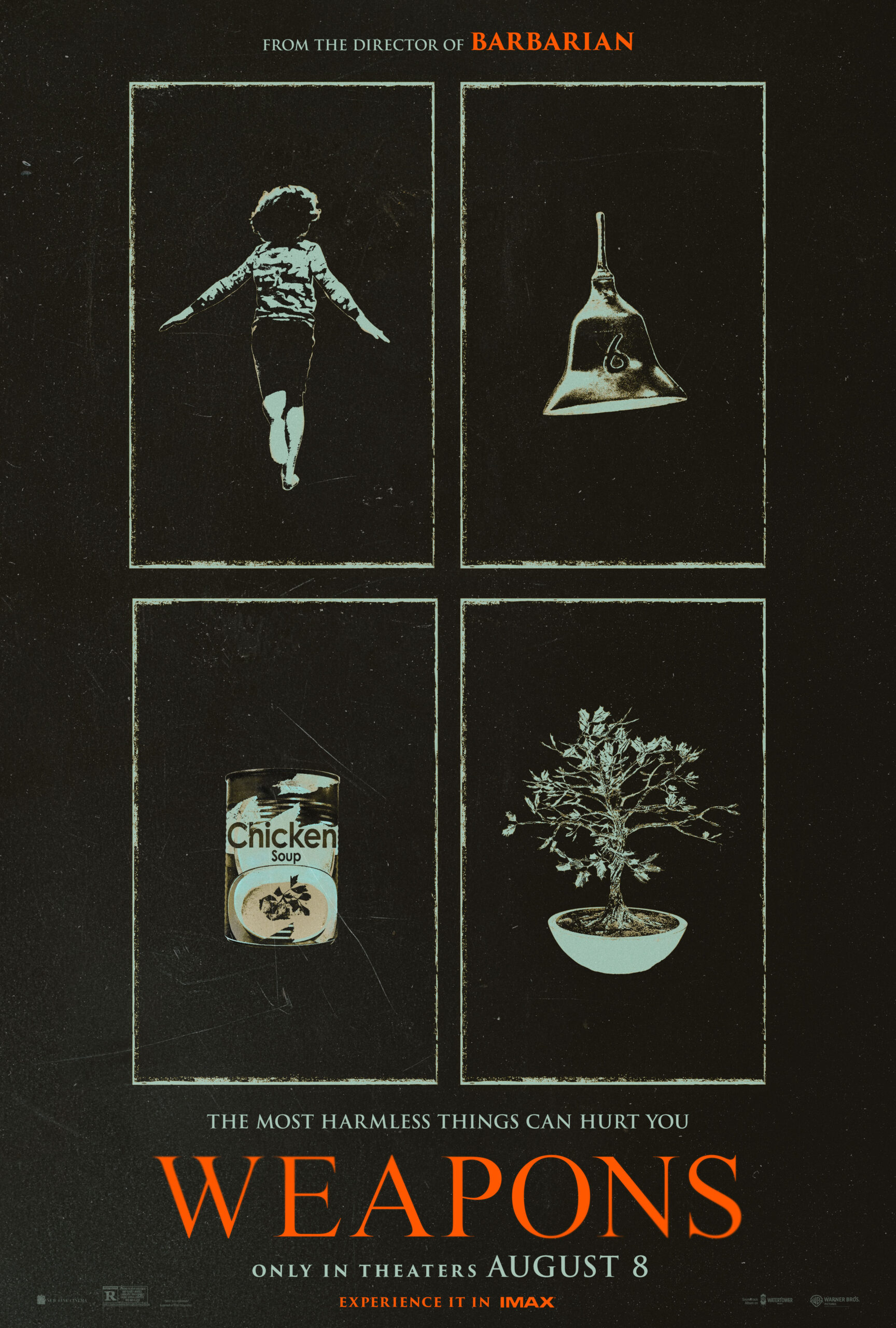
Without talking about the specific culprit, I want to talk about the symbols. There is a tiny bonsai tree that is black in its entirety. The color symbolizes death, and one victim pukes buckets of black liquid. The tree appears to be syphoning off the illness from the culprit into its limbs, but needs to be purged to maintain the culprit’s life, thus the need for healthy victims, the younger, the better. A victim’s personal object intertwined with a stick from the tree then mixed with the culprit’s blood, depending on the culprit’s intention, carries the potential side effects of loss of autonomy and taking the victim’s vitality. It can also have the effect of targeting someone for attack. Blood magic is used to bind the victim to the culprit’s will. The bell with a triangle and 6 carved on it activates the substitution of the person’s autonomy with the culprit’s. It ends when the stick is broken and tossed into water as if there is an invisible fire that needs to be extinguished.
The combination of the bell with a carving of a triangle and six does not seem to adhere to any specific Wiccan practice but may be used to evoke popular cultural images of the occult. Six is associated with the antichrist or devil in movies, but in Wiccan symbols, six is supposed to balance the material with spiritual world or symbolize the void, potential for creation. A triangle in Wiccan usually represents the earth elements (earth, air, fire and water); the Maiden, Mother and Crone; or the cyclical nature of life or balance. More specifically it can symbolize fire and air, spirit dominating the material world or direct energy. It could also just evoke other horror classics like “The Void” (2017) or “Mandy” (2018) with vague reference to Westerners obsession with mystical qualities of the pyramid. The patch on the police uniform also has a triangle in a circle, which is supposed to signify protection. Ha! These symbols and tools are perverted to serve the culprit and subvert nature and balance.
The themes of addiction and blood magic seem to get conflated with the police except the police do not have the instruction manual on how to control another’s autonomy except in a crude way. The police do not have the same intent or purpose as the culprit, but they unwittingly use the same tools to serve themselves, not others. Both reject conventional means to handle their physical problems and reject accountability. Cregger seems to define those behaviors as parasitic.