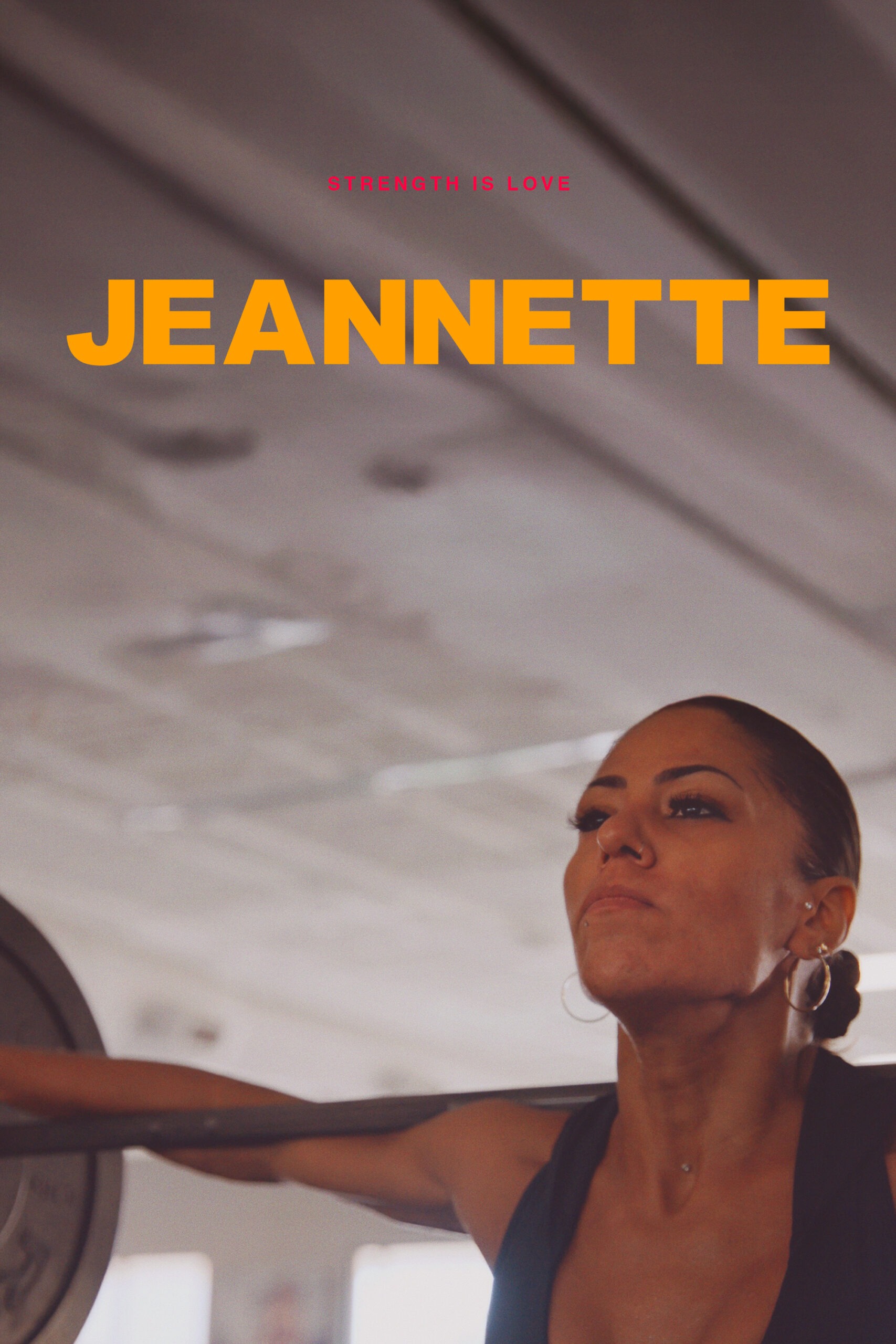

As much as “Love Lies Bleeding” (2024), a movie about lesbian lovers and the intersection of crime and bodybuilding, enraptured audiences with its bold, sexual excellence, it does not tell the real story of queer women bodybuilders like Jeannette Feliciano, the subject of director Maris Curran documentary feature, “Jeannette” (2022), which does not sensationalize that intersection. Feliciano, a survivor of the Orlando Pulse massacre, a mass shooting at a gay nightclub, that occurred on June 12, 2016, Latin night, finally feels ready to return to the stage, but what does life look like after someone targets and tries to kill her?
“Jeannette” is less about the shooting than a character study of an extraordinary person trying to achieve athletic goals, live an ordinary functioning life and maintain relationships regardless of how far away they are. Feliciano is goals. She raises her son, Anthony McCoy, and they have a solid relationship. Feliciano’s image of motherhood is impressive and inspiring. He clearly enjoys spending time with her and respects her instruction at an age when most teenagers are pulling away from adult instruction, especially from parents. She appears to be on such good terms with her ex that she may offer him too much grace. She spends a lot of time with her friends at home and at work as a personal fitness trainer who aims to train the mind and body. Many of the people around her share the same traumatic experience in addition to their interests and identities.
While watching Feliciano, it is easy to imagine the life that she had pre-mass shooting. Was Eve a bodybuilder? Feliciano uses her body with pride and joy in skintight, revealing outfits, but nothing about it seems sexual. Her body is her tool, and it is refreshing to see a woman athlete and mother being scorching hot and just existing without a filmmaker sexualizing her. Her life was not perfect. Curran plays audio from Feliciano’s interviews over tranquil, still exterior shots at times when people are not around. The still, transcendent, iconic sights of her neighborhoods, whether Orlando or Puerto Rico, contrast the violence described in her words. Do not expect any news archive clips from the night of the shooting. “Jeannette” is rooted in the present, the aftermath. Whether spontaneous memorials at the nightclub, afterhours fairgrounds or more quotidian surroundings, cinematographer Jerry Henry treats each shot as if it is a masterpiece. Editors Eduardo Serrano and Katrina Taylor are deft at knowing the perfect pairing between the content’s substance and the appropriate accompanying image.
There are at least two huge obvious challenges in Feliciano’s life. “Jeannette” captures an argument between Feliciano and her mother, Anna, after Feliciano congratulates her sister, Laila Ortiz, on her impending nuptials to Ana Cabrera. Anna, a Seventh Day Adventist, uses the Bible to elevate her homophobia above criticism and repercussions. Feliciano addresses her mom’s comments immediately and firmly. Feliciano is out and proud with a girlfriend, Yaris Cruz. At least in her home, Feliciano should expect to be free of judgment, but there is no safety, and this scene validates her confessionals that being gay in Puerto Rico was implicitly forbidden. It is an unexpected, frank moment that is more shocking because Feliciano has cultivated such a warm, loving, welcoming, accepting and open home in every sphere that she inhabits.
Filming of “Jeannette” coincided with Hurricane Maria in September 2017, which devastated Puerto Rico. It demonstrates another way that Feliciano navigates crises that would fell the average person. Feliciano starts traveling between home and Puerto Rico while training for the competition, but she uses helping her family recover from the destruction as another way to train. Her sister-in-law clearly enjoys having a strong woman around to do all the literal heavy lifting. Astonishingly, moving chopped tree trunks is more difficult than flipping enormous tires at the gym.
Unlike most movies with a competition embedded in the story, the denouement of “Jeannette” does not culminate with it, and it is actually a bit anticlimactic. It is a strange world. Feliciano is already a brown woman, but spray tans are in vogue. She is almost unrecognizable in that sequence. Because movies like “Love Lies Bleeding” and “Magazine Dreams” (2023) use the stage work to culminate in disaster, it is a relief that it is uneventful, but it is so fleeting that the name of the competition (maybe Curran did not have permission to use it) is not even known. The actual ranking felt forgettable and curtailed instead of validating.
The real denouement involves Feliciano exploring life after a high high and a low low in quick succession. After the competition, like an Old Testament prophet after a big miracle, Feliciano is drained and begins to show the wear and tear of accumulated stressors. It is relatable, especially to other women of color, when Feliciano tearfully exclaims, “I’m going to be the person that I didn’t have….but at times, it is hard for me because I don’t have somebody to talk to.” Even though she still looks great and is meeting all her responsibilities, she hits a psychological wall and has no more gas in the tank. “Jeannette” shows how hard it is for a physically and mentally strong person who feels as if she has no equal or superior to lean on who can play that role in their life. She and her best friend, Yvens “Eazzy” Carrenard, are always there for each other, but he also feel alone because life goes on after a mass shooting, and there are no breaks.
If “Jeannette” has any issues, it can be hard to discern the relationship between everyone with only context clues. Curran correctly chooses to be a fly on the wall instead of including narration or text on the screen to orient viewers to the time, place and people who appear on screen. By the time you figure it out, the scene is over. There are scenes that reveal that Feliciano is a gun owner, practices at a gun range on paper targets and teaches gun safety to her son, but there is no dialogue about gun reform legislation, which would be a talking head point. This film is a slice of life profile, not about politics, but it is still frustrating not to hear her reflections on the matter though irrelevant to her normal life. She does express annoyance over no one ever being punished for the shooting though forty-nine people died and countless others like Feliciano suffered, but Feliciano does not articulate what a functional world would look like. It is implied that Feliciano believes that the shooter’s wife should have been found guilty.
If you are not into documentaries or the various themes in “Jeannette,” this one may not be the best way to start getting into the genre, especially since there are subtitles to translate the Spanish dialogue. It is refreshing to have a subject be a normal, decent and interesting person who can carry the entire movie without the audience falling asleep or getting bored. Feliciano lives in a way that would be aspirational for an ordinary person. She also just happens to be a gay, Puerto Rican, single mother. It is an honor to be invited into her world. Let’s hope it remains a safe one.